

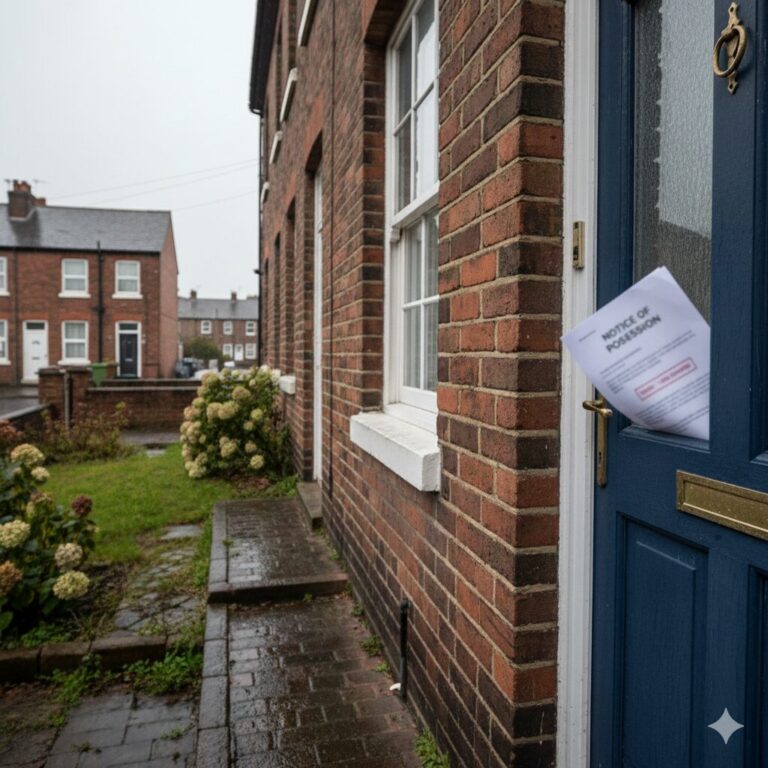
From 1 May 2026, private landlords in England will need a valid ground to regain possession of a property. To help landlords and letting agents prepare, the government has published updated guidance explaining how the new possession grounds will work under the Renters’ Rights Act.
From May 2026 onwards, the steps to regain possession become much clearer: choose the ground (or grounds) that apply, serve the correct notice period, and if the tenant has not left once that notice expires, you can begin a court possession claim immediately. Landlords can also rely on multiple grounds within the same case where appropriate.
One rule overrides everything else: the court cannot grant possession unless the tenant’s deposit has been protected in a government-approved tenancy deposit scheme.
The new system places all possession grounds into two categories.
- Mandatory grounds, where the court must grant possession if the landlord proves the ground applies.
- Discretionary grounds, where the court decides whether eviction is reasonable even if the ground is established.
Mandatory grounds
Ground 1
You can use this ground when you, or a close family member, genuinely need to live in the property. It cannot be used during the first 12 months of the tenancy, and you can only move in once possession has been granted. Notice to be given: 4 months
Ground 1A
If you have a genuine intention to sell the property, you can seek possession, but not within the first 12 months of a new tenancy; social landlords/PRPs cannot rely on this ground until 2027. Notice to be given: 4 months
Ground 1B
This ground is only for Rent to Buy properties, and can be relied on where the tenant has been offered the chance to buy at the end of the scheme, but does not do so; social landlords/PRPs cannot rely on it until 2027. Notice to be given: 4 months
Ground 2
Where the mortgage lender needs to take back the property because payments have been missed, they can apply for possession. If the court grants it, the tenant must leave on the date set by the court. Notice to be given: 4 months
Ground 2ZA
Where you sublet under a superior lease that is ending within 12 months, this ground can only be relied on if you are an agricultural landlord, provide supported accommodation, or represent a company that is at least 50% council-owned; social landlords cannot rely on this ground until 2027. Notice to be given: 4 months
Ground 2ZB
Where you sublet under a superior lease that was for a fixed term of more than 21 years, and that lease is ending, has ended, or will not be extended within 12 months, you can seek possession on this ground. Notice to be given: 4 months
Ground 2ZC
After a superior lease ends, the landlord under that lease can become your tenant’s landlord and apply to court for possession, but only where you originally let the property on an assured tenancy and you were an agricultural landlord, a supported accommodation provider, a company at least 50% council-owned, or a PRP; the notice must be served by the superior landlord, and where the original landlord was social, this ground cannot be relied on until 2027. Notice to be given: 4 months
Ground 2ZD
Where the superior lease was for a fixed term of more than 21 years and has expired, the superior landlord can seek possession, but they must apply to the court within 6 months of the lease reverting to them. Notice to be given: 4 months
Ground 4
This ground is available only to universities and colleges. It applies where the home has been used for student accommodation within the twelve months prior to the tenancy starting. Notice to be given: 2 weeks
Ground 4A
If your property is a student HMO and is needed for a new group of full-time students in line with the academic year between 1 June and 30 September, you can seek possession, but only if the tenancy was not agreed more than six months before it began and you gave advance notice that you intended to rely on this ground. Notice to be given: 4 months
Ground 5
Where the property is primarily used to house a minister of religion and is needed for that purpose again, you can seek possession on this ground. Notice to be given: 2 months
Ground 5A
Where you need the property to house an employed or self-employed agricultural worker, you can seek possession on this ground. Notice to be given: 2 months
Ground 5B
Where the property was let to a tenant because they met specific employment requirements (for example, key worker criteria) and they no longer meet those requirements, you can seek possession so the home can be let to someone who does; social landlords/PRPs cannot rely on this ground until 2027. Notice to be given: 2 months
Ground 5C
If the tenant was housed because they were employed by you, you can seek possession if their employment ends; this also applies where the tenancy was not intended to last for the full length of employment and the property is needed for a new employee, and where the home is let to police constables who are not classed as employees. Notice to be given: 2 months
Ground 5D
Where a social landlord or PRP has let a property based on employment criteria and the tenant no longer meets those conditions, possession can be sought on this ground, but only from 2027 when the changes apply to the social rented sector. Notice to be given: 2 months
Ground 5E
If the property is usually used as supported accommodation and is to be rented out as supported accommodation again, you can seek possession on this ground, but not if the tenant needs the property for supported accommodation. Notice to be given: 4 weeks
Ground 5F
If you rented out your property as supported accommodation, you can seek possession on this ground where the support has stopped, or funding has ended, or the accommodation is no longer suitable because the tenant’s support needs have changed. Notice to be given: 4 weeks
Ground 5G
If the property was used as temporary accommodation for statutory homelessness duty and the council has told you it is no longer needed, you can seek possession, but you must start the process within 12 months of being notified; social landlords/PRPs cannot rely on this ground until 2027. Notice to be given: 4 weeks
Ground 5H
If the tenancy was granted as stepping-stone accommodation with lower rent and eligibility criteria (such as being within a certain age range and/or in work or actively seeking work), you can seek possession if the tenant no longer meets the criteria or if the agreed stepping-stone period has ended; social landlords/PRPs cannot rely on this ground until 2027. Notice to be given: 2 months
Ground 6
If you need to redevelop or demolish the property and the tenant cannot live there while the work is carried out, you can seek possession on this ground, though it is usually not available in the first six months of a tenancy; social landlords may need to provide suitable alternative accommodation unless the tenant was warned before the tenancy began, and social landlords/PRPs cannot rely on this ground until 2027. Notice to be given: 4 months
Ground 6A
If you are a social landlord and your tenant has been living in decant accommodation because their original home was or is being redeveloped, you can seek possession on this ground from 2027, as long as suitable alternative accommodation is available for them. Notice to be given: 4 months
Ground 6B
If a court orders you to regain possession following enforcement action for a legal breach, you can seek possession and may be required to pay compensation. Notice to be given: 4 months
Ground 7
If someone inherits the tenancy but was not living in the property immediately before the tenant died, you can seek possession, usually within 12 months of the death; social landlords/PRPs cannot rely on this ground until 2027. Notice to be given: 2 months
Ground 7A
If the tenant, household member, or visitor is convicted of a serious crime, breaches an antisocial behaviour order, or a closure order blocks access for 48+ hours, you can apply immediately, but any possession order cannot take effect until 14 days after notice is served. Notice to be given: none
Ground 7B
If the Secretary of State notifies you that your tenant has no Right to Rent under immigration law, you can seek possession on this ground. Notice to be given: 2 weeks
Ground 8
If your tenant owes at least 3 months’ rent (monthly) or 13 weeks’ rent (weekly or fortnightly) on both the notice date and the hearing date, you can seek possession under this mandatory ground; it will fail if arrears drop below that level by the hearing, and arrears caused solely by delayed Universal Credit do not count. Notice to be given: 4 weeks
Discretionary grounds
Ground 9
If your tenant has been offered suitable alternative accommodation, you can seek possession on this ground, but the court will decide whether eviction is reasonable. Notice to be given: 2 months
Ground 10
If your tenant owes you rent, you can seek possession before they owe 3 months’ rent, but the court will only grant possession if it considers eviction reasonable. Notice to be given: 4 weeks
Ground 11
If your tenant has repeatedly delayed paying rent, you can try to evict them, but you must give notice before applying to court. Notice to be given: 4 weeks
Ground 12
This ground applies where the tenant has broken a non-rent-related term of the tenancy agreement. The court will decide whether the eviction is justified. Notice to be given: 2 weeks
Ground 13
If your tenant has allowed the condition of the property to get worse, you can try to evict them, but you must give notice before applying to court. Notice to be given: 2 weeks
Ground 14
If the tenant, someone living with them, or a visitor engages in antisocial behaviour or commits a serious offence in or near the property, you can apply to the court straightaway. A possession order cannot take effect until fourteen days after notice is served. Notice to be given: none
Ground 14A
If your tenant has carried out domestic abuse, you can try to evict them, but only where their partner or someone living with them has left and is unlikely to return; social landlords/PRPs cannot rely on this ground until 2027. Notice to be given: 2 weeks
Ground 14ZA
If your tenant or another adult living with them has been convicted of an offence committed during a riot, you can try to evict them, but you must give notice before applying to court. Notice to be given: 2 weeks
Ground 15
If your tenant has allowed the condition of the furniture to get worse, you can try to evict them, but you must give notice before applying to court. Notice to be given: 2 weeks
Ground 17
If your tenant, or someone acting on their behalf, gave false information to get the property, you can try to evict them, but you must give notice before applying to court. Notice to be given: 2 weeks
Ground 18
If your tenant is in supported accommodation and does not engage with the support, you can try to evict them, but you must give notice before applying to court. Notice to be given: 4 weeks
Need help choosing the right possession ground?
If you are unsure which possession ground is right for your circumstances, or how much notice you need to give, getting guidance before serving anything is always the safest approach. Your local Lovelle team can walk you through the new Renters’ Rights Act rules, help you identify the correct ground, and ensure your paperwork is compliant and properly prepared.
For additional clarity, you can also explore Lovelle’s landlord resources, which explain what the Renters’ Rights Act means for self-managing landlords.